A survey of nearly 500 agritourism consumers conducted by Oregon State University (OSU) in 2025 has confirmed that personal recommendations from friends, family, and colleagues remain the single most effective channel through which visitors discover farm operations, outperforming social media and online search. The findings carry direct implications for how agritourism operators structure their marketing spend and design on-farm experiences.
What the Survey Found
OSU’s agritourism program coordinator, Audrey Comerford, said the research team had expected digital channels to dominate discovery. The data showed otherwise.
“We assumed that they learned about farms from Facebook or social media or doing online searches. And one of the more surprising things was that it’s more from recommendations,” Comerford said. “Word-of-mouth recommendation is still really top.”
The survey covered visitors to 11 farms across Oregon during 2025. Key findings include:
- Word-of-mouth referral from friends, family, and co-workers was the most common discovery method by a clear margin.
- Education was cited as the top reason consumers consider public farm visits important, followed closely by understanding where food comes from.
- On-site food and drink was a significant factor in which farms consumers chose to visit, alongside locally grown products and family-friendly activities.
How Operators Are Applying the Finding
Three Oregon operations whose customers participated in the survey illustrate different practical responses to the data.
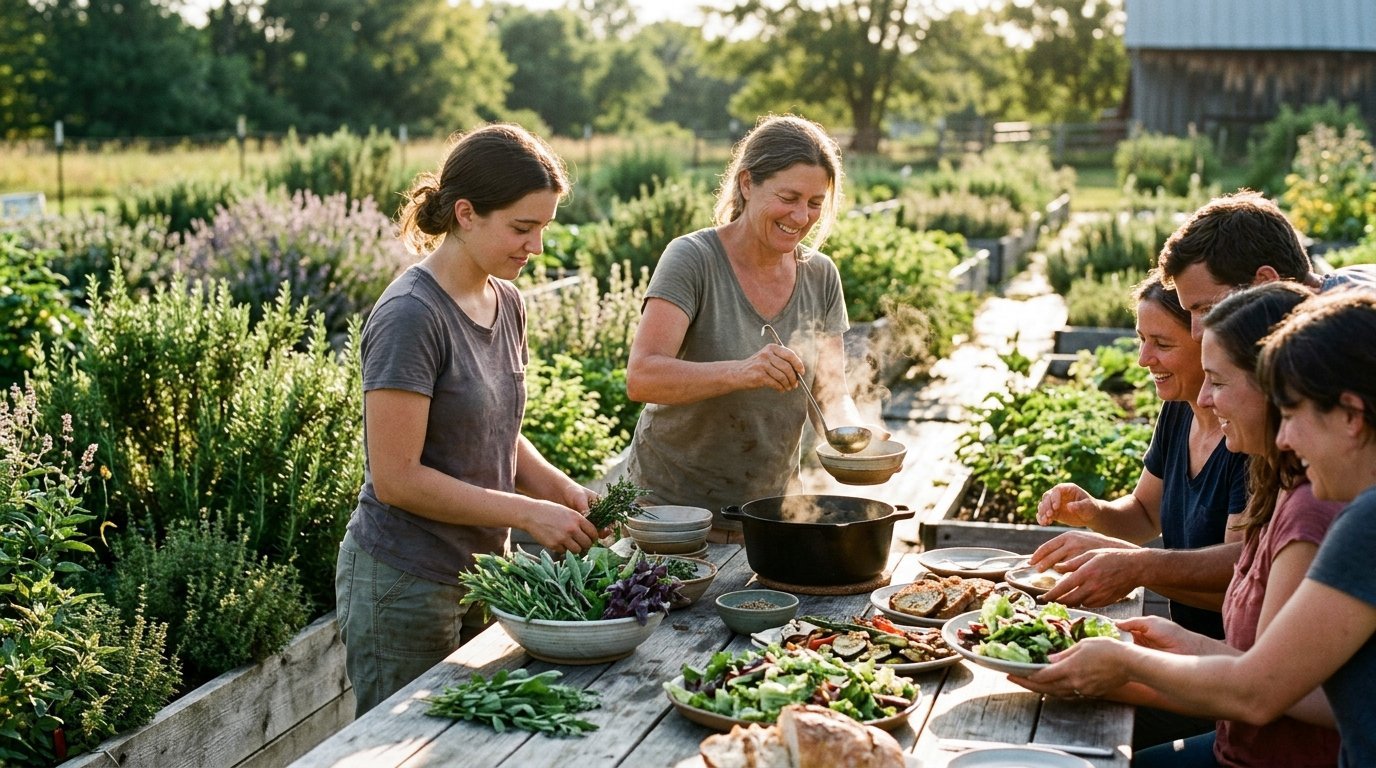
The Thyme Garden, an herb and seed farm near Alsea, Oregon, operated by sisters Emily Stimac and Bethany Glanville from a business their parents established in the 1980s, runs a deliberately small marketing budget and relies on referrals generated by its on-farm meals. Herbs grown on the property are used in food served to visitors, creating a sensory experience that, according to the operators, customers discuss with others after leaving.
TMK Creamery near Canby, Oregon, operated by the Koch family alongside an affiliated beef cattle ranch near Klamath Falls, Oregon, built its agritourism model around full vertical transparency. Visitors can walk from the creamery to the adjacent dairy, interact with animals, and consume cheese, ice cream, vodka, and beef all produced on the property. Tessa Koch said that obtaining the necessary food service and production licences was essential to generating reliable foot traffic. “People need to eat and drink at these farms. It’s hard to get foot traffic out unless you have that,” she said.
Leaping Lamb Farm, also near Alsea, operated by Scottie Jones as a sheep property with tours and overnight accommodation, uses a model that balances structured education with open-ended visitor freedom. Jones described the challenge as moving beyond what she called a “petting zoo” model, instead giving visitors enough context to understand farm operations while allowing them to choose their own activity, whether hiking, a picnic, or time with the animals.
Food Service is a Revenue Driver and Regulatory Flashpoint
The OSU survey’s finding on food service sits inside a longstanding regulatory dispute in Oregon. State land use law is intended to protect farmland for traditional agricultural production, and on-farm food service has been a recurring point of contention between operators seeking additional revenue streams and regulators concerned that commercial hospitality activity could effectively displace agricultural land use.
Comerford noted that operators considering food service face a layered compliance pathway covering risk management, product liability insurance, county health department requirements, and inspections. “While it is interesting to see that, how many steps does the farm want to take and how much risk when offering these different activities?” she said.
Tessa Koch’s position is that the compliance investment is justified by the traffic it generates, and that operators can address land use concerns directly by ensuring food and drink sold on the property is produced on that property. “We’re producing everything that we’re trying to sell,” she said.
What This Means for WA Operators
The OSU data reinforces what many experienced WA agritourism operators already practise: the return on a genuinely memorable on-farm experience is measured in referrals, not reach. For operators who have been allocating significant time or budget to building social media audiences, the survey is a prompt to audit whether that investment is actually generating bookings, and to ask what is being done on-farm to give existing visitors something worth telling people about.
The findings also point to a specific mechanism. Education about food provenance was the top reason survey respondents gave for valuing farm visits, and on-site food and drink influenced which farms they chose. Operators who can close that loop, producing something on the property and serving it to visitors in a form they can taste and associate with the land, appear to generate stronger word-of-mouth than those who keep production and hospitality separate.
On food service regulation, WA operators face a similar framework to Oregon’s. Western Australia has equivalent agricultural land protection legislation restricting on-farm commercial activity, and local government planning conditions, food business registration under the Food Act 2008, and health department requirements also apply. Operators planning to introduce or expand on-farm food service should confirm their current planning approval covers that activity and contact their local government environmental health team before committing to infrastructure spend.
The broader regulatory tension described in the Oregon story, specifically the concern that agritourism commercial activity could displace rather than support agricultural production, is a debate WA operators should watch.