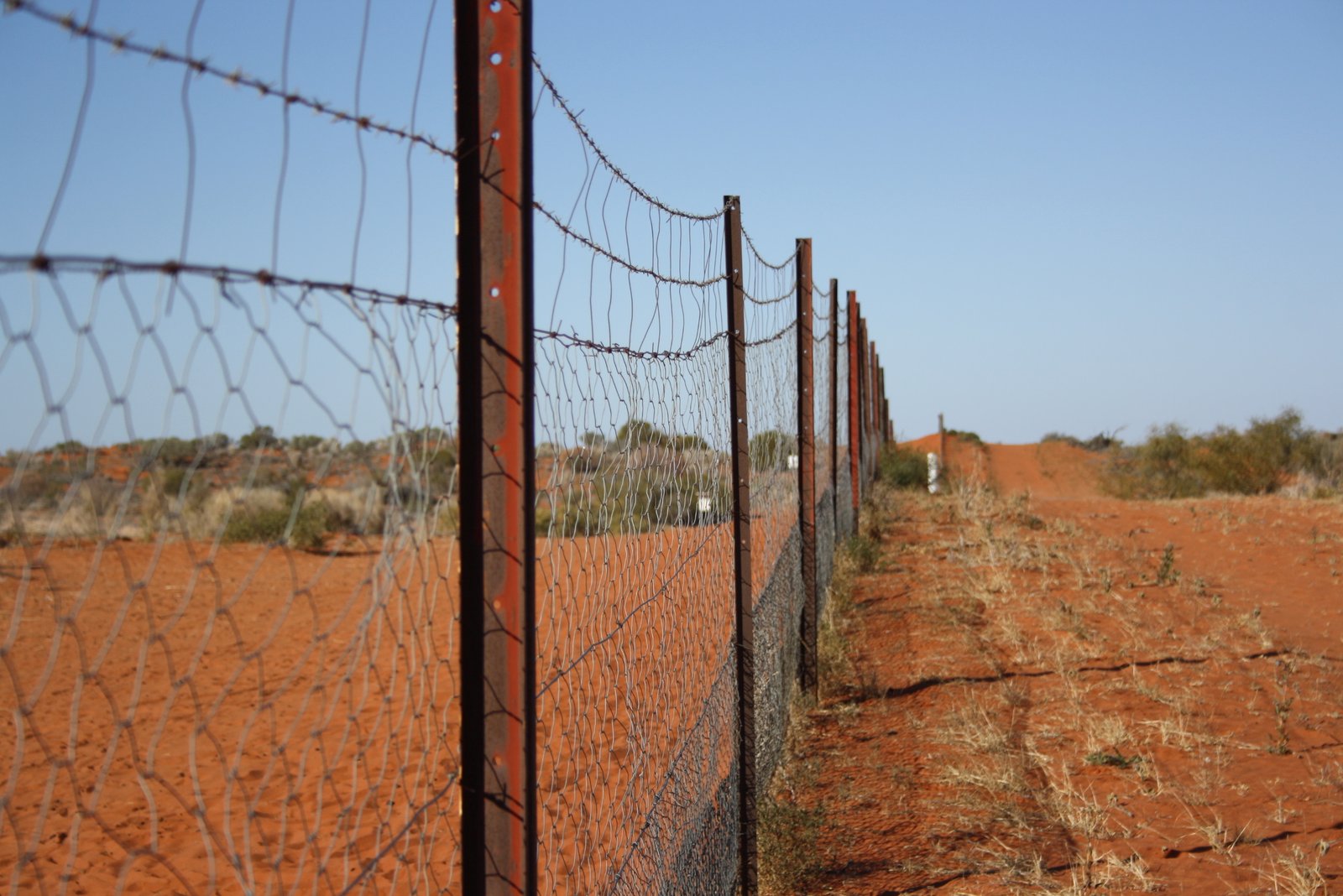
The State government has confirmed it has no completion date and no new funding for the remaining 136-kilometre section of the State Barrier Fence north of Salmon Gums, leaving Esperance-region livestock producers to absorb mounting losses from wild dog attacks with no clear end point in sight.
The admission came in a parliamentary response on 20 November 2026, when Parliamentary Secretary Lisa O’Malley, speaking on behalf of the Agriculture and Food Minister, responded to a grievance raised by Member for Roe Peter Rundle. The response provided no timeline and no additional capital commitment for the unfinished Esperance extension.
The Scale of Losses Already Recorded
Rundle cited two properties to illustrate the financial damage accumulating while the fence remains incomplete. One cropping enterprise has estimated boundary-related losses of $360,000. At a second property near Salmon Gums, wild dog attacks killed 100 pregnant ewes in 2026, producing an immediate loss of approximately $25,000. Once the damage to breeding lines and flock genetics is counted across five years, that figure is expected to exceed $200,000.
“Wild dogs do not wait for departmental processes,” Rundle said. “Every month of delay means more livestock losses, reduced productivity and greater financial and emotional pressure on farming families.”
These are not theoretical risks. For operators running livestock in the region, the losses are compounding annually against infrastructure that the government has acknowledged should already be in place.
How Progress Was Actually Made
For several years, the State government attributed the stalled extension to unresolved negotiations with the Ngadju Native Title Aboriginal Corporation (NNTAC) over an Indigenous Land Use Agreement (ILUA). Rundle disputed that account directly in Parliament.
Following an earlier grievance raised by Rundle in June 2026, NNTAC chief executive Stephen Rogers stated publicly that DPIRD had made no contact with Ngadju, despite the organisation’s willingness to negotiate. Direct engagement then took place between the Esperance Biosecurity Association (EBA) and NNTAC, producing a memorandum of understanding (MoU) supporting further negotiations on the fence’s original surveyed alignment.
O’Malley acknowledged the MoU but noted that the State is not a signatory and that a formal ILUA remains a requirement before construction can proceed. She said the minister met stakeholders in Esperance in May 2026 and landholders in June 2026, with “no overwhelming consensus” on how to progress. Alternative alignments were offered by the minister, but the EBA has indicated preference for the original route, which O’Malley described as crossing several land tenures and “not a simple task.”
Government Position and What Comes Next
O’Malley pointed to a $33 million wild dog management package funded since 2017, including $3.4 million in the 2026-27 State Budget and approximately $8 million allocated to recognised biosecurity groups in the current financial year. However, none of this capital is directed at completing the fence section itself.
Significantly, DPIRD has been asked to prepare a position paper on future wild dog management, which will direct funding from the 2027-28 budget cycle onward. O’Malley cited “growing sentiment” in parts of the community for greater protection of dingoes, stating the government must “strike the right balance” between agricultural protection and the cultural and environmental significance of dingoes.
Shadow Agriculture and Food Minister Lachlan Hunter, who has visited Esperance producers alongside Rundle, said the government had exhausted its reasons for delay. “This fence is a critical piece of infrastructure that protects farmers’ livelihoods, yet seven years on, producers are still waiting for Labor to deliver,” Hunter said.
What This Means for WA Operators
Livestock operators in the Esperance and Goldfields-Esperance region face continued wild dog pressure with no confirmed construction timeline for the 136-kilometre gap. The DPIRD position paper on future wild dog management, which will shape funding from the 2027-28 budget onward, is the next formal decision point operators should monitor and engage with. Operators who have not already connected with the Esperance Biosecurity Association should do so: the EBA’s direct engagement with NNTAC produced more tangible progress than years of departmental process. Operators elsewhere in WA who rely on existing barrier fence sections should audit their boundary arrangements now rather than waiting on government action, given the trajectory shown in this case. Membership of the Western Australia Agritourism Association gives farm and station operators a collective voice in precisely the kind of infrastructure and biosecurity advocacy this situation requires.