Vietnam’s rural tourism sector has grown from isolated community experiments into a nationally regulated industry, with the Vietnam National Tourism Administration now developing a formal set of sustainability criteria for rural tourism destinations. The policy shift, reported in 2025, follows rapid and largely unplanned growth that exposed recurring operational risks: loss of cultural authenticity, uneven distribution of income within host communities, infrastructure strain, and the erosion of the core agricultural identity that made properties attractive in the first place.
How the Vietnamese Model Developed
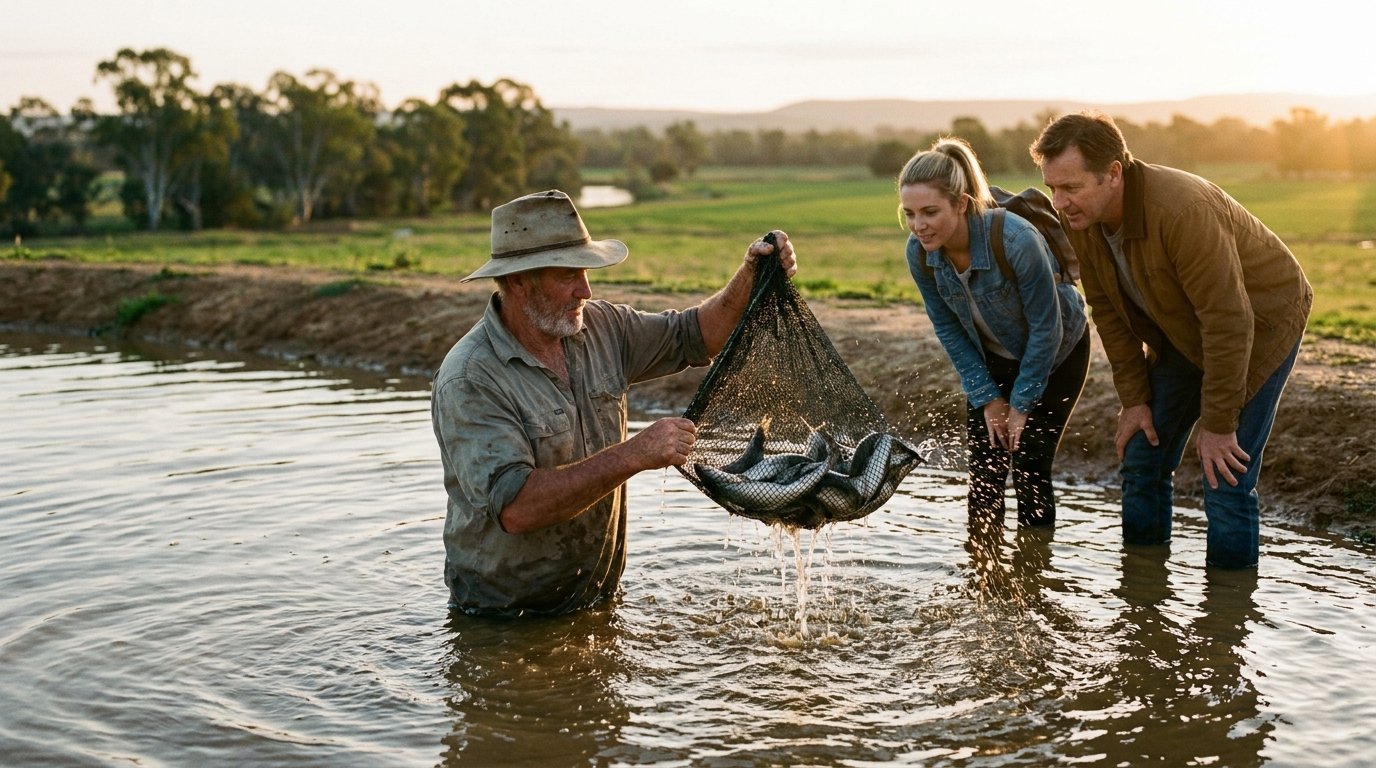
The most documented case involves Dong Thap province in the Mekong Delta, where flood-season fish farming expanded from approximately 120 hectares in 2019 to nearly 2,000 hectares by 2025. Operators in the region began layering visitor experiences onto existing aquaculture activity, allowing tourists to observe fish harvesting, participate in production tasks, and purchase local produce directly. The tourism product was not constructed separately from the farm operation. It was built inside it.
Similar integration is reported at Tra Que vegetable village in Hoi An, where farmers deliver hands-on cultivation experiences alongside food preparation using on-farm ingredients, and in Mai Chau, where households provide accommodation while maintaining active agricultural production and traditional craft output.
The Vietnamese National Tourism Administration’s deputy director, Pham Van Thuy, framed the commercial logic directly: when visitors encounter a product in context, meet the producer, and understand its origin, the value of that product expands beyond its physical form to include the service, the culture, and the experience. Products sold through that channel generate more per unit than the same product sold through a retail shelf.
The Risks Vietnam Is Now Managing
Vietnamese industry analysts have identified a set of failure patterns that emerge when rural tourism scales without governance:
- Destinations copy each other’s product formats, reducing differentiation and competitive position
- Physical landscapes are altered to accommodate visitors at the expense of the working character that attracted them
- Cultural practices are simplified into performances detached from their original function
- Revenue from tourism concentrates in service roles rather than flowing to farming households
- Environmental pressure increases as visitor numbers rise without commensurate infrastructure investment
Pham Hai Quynh, director of the Asian Tourism Development Institute, noted that in chasing visitor demand, operators risk destroying the specific qualities that gave them market appeal. The observation is relevant to any operator who has considered expanding capacity or diversifying programming beyond their core production activity.
Vietnam’s Regulatory Response
The draft sustainability criteria being developed by the Vietnam National Tourism Administration cover destination governance, community welfare, environmental protection, cultural preservation, service quality, and market development. A notable design principle is described as “rigid framework, flexible application”: core requirements around legal compliance, safety, and community rights are standardised across all destinations, while advanced requirements such as digital transformation and emissions reduction are subject to staged implementation that accounts for the different circumstances of highland villages, coastal communities, and agricultural plains.
The stated purpose of the criteria is not to generate compliance scores but to give operators a self-assessment tool: what resources do they have, what is missing, where should investment be prioritised, and to what extent are farming households actually capturing the economic benefit.
What This Means for WA Operators
The structural risks Vietnam is now legislating against are not hypothetical for WA agritourism operators. They are the same pressures that emerge whenever a working farm scales visitor activity without a deliberate operating model.
The most transferable lesson from the Vietnamese experience is the sequencing argument: tourism programming that is built inside existing agricultural activity is more defensible commercially and operationally than programming that is constructed alongside it. An operator who takes visitors through a working shearing shed during an actual shearing run, or who sells produce harvested that morning as part of a paddock-to-plate format, is delivering a product that cannot be replicated by a competitor without the same farm. An operator who builds a separate “tourism experience” that is staged rather than live is in a more vulnerable competitive position and is carrying two operational systems instead of one.
WA operators considering expansion or product development should test new programming against a straightforward question drawn directly from the Vietnamese analysis: after the visitors leave, does the farming household earn more, does the land remain in usable condition, and does the activity reinforce or dilute the agricultural identity of the property?
The Vietnamese regulatory framework is unlikely to be directly applicable in a WA context. Western Australia’s agritourism licensing, land use planning, and biosecurity frameworks operate through different mechanisms, and WA operators have managed the core challenges of seasonal variability, fire risk, and visitor safety under existing state regulations for considerably longer than Vietnam’s rural tourism sector has been formalised. However, the self-assessment logic embedded in Vietnam’s draft criteria, specifically the prompt to identify what resources exist, what is missing, and who is genuinely benefiting, is a useful planning discipline for any WA operator reviewing their current model or preparing a business case for new infrastructure.