The Department of Primary Industries and Regional Development (DPIRD) has issued an alert calling on rural landholders to watch for boneseed as spring flowering season begins, with seedlings, juveniles and adult plants already confirmed across several WA regional areas and Perth metropolitan districts.
Boneseed is a declared weed under WA biosecurity law, meaning landholders carry a legal obligation to monitor for it and report any finds to DPIRD. Failure to manage declared pests on your land is a compliance risk, not a matter of choice.
Where Infestations Have Already Been Found
Confirmed detections span a wide geographic spread. Regional areas affected include Albany, Boddington, Narrogin, Woodanilling, Wandering, West Arthur and Vasse. Within the Perth metropolitan region, infestations have been located in Armadale, Kalamunda, Mundaring and the Swan Valley.
Agritourism operators running properties in or near these areas should treat this alert as an immediate prompt to inspect. Properties that open to the public face an added reputational and operational risk if weed infestations are visible or spreading in areas visitors access.
What Boneseed Looks Like and Why It Spreads Fast
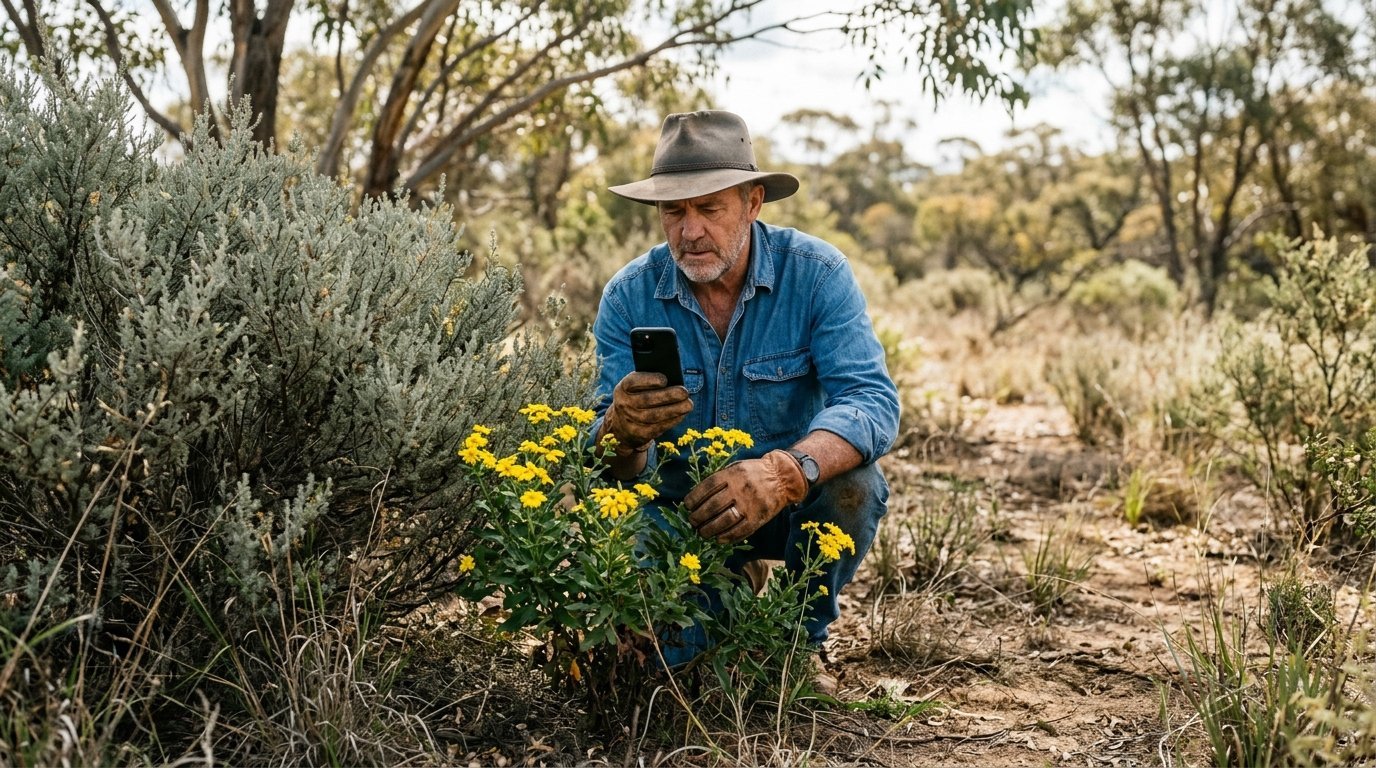
Boneseed was originally introduced as a garden plant and produces bright yellow flowers between August and October. It is capable of producing up to 50,000 seeds per year, with seeds remaining viable for many years. This biology makes it unusually difficult to eradicate. DPIRD’s own protocol requires annual monitoring for at least 15 years with no mature or seeding plants detected before a site is formally declared free of infestation.
DPIRD Regional Biosecurity Coordinator Tim Stevens described the weed as capable of rapidly invading a wide range of landscapes and threatening native biodiversity and habitats, with eradication teams often working in challenging terrain and conditions to locate and treat infestations.
Landholder Obligations and DPIRD Support
Under WA biosecurity requirements, landholders must:
- Monitor their land for boneseed and other declared pests
- Report any new detections to DPIRD promptly
- Participate in ongoing monitoring once a detection is mapped
DPIRD will conduct follow-up audit searches on known infested areas and offers advice and management support to landholders on request. Once a new detection is reported, the site is mapped and enters a minimum 15-year monitoring program.
Operators who discover boneseed on their property should report it to DPIRD’s Pest and Disease Information Service or log it via the MyPestGuide Reporter app. Further detail is available on the DPIRD boneseed page and the current biosecurity alert on the DPIRD website. Media enquiries can be directed to donna.coleman@dpird.wa.gov.au or 08 9368 3937.