Two Australian agtech companies are demonstrating measurable cost reductions on Western Australian properties through drone and autonomous robot systems, with operators reporting savings on helicopter use, labour, and vehicle time across large-scale operations.
Thermal Drones Replacing Helicopters on Pastoral Properties
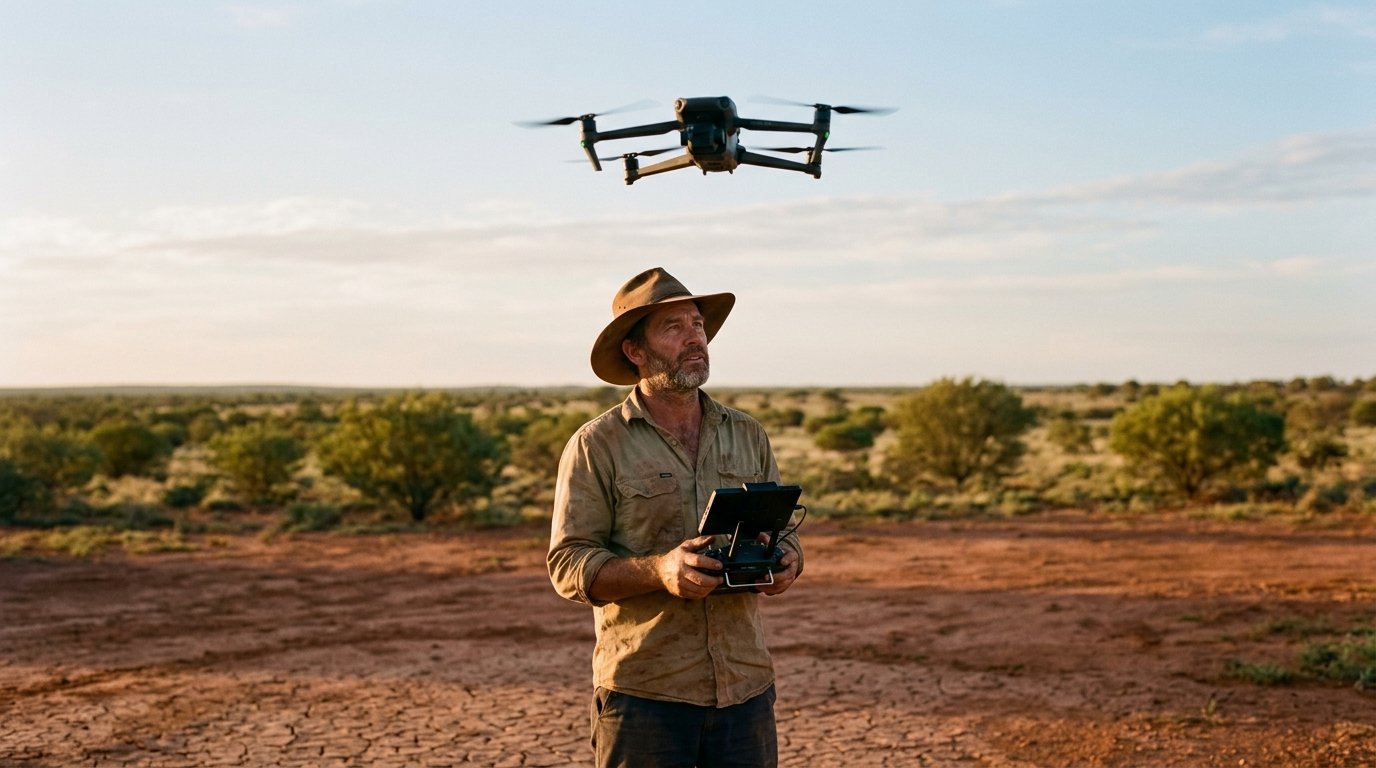
De Grey Station, a pastoral property spanning more than 400,000 hectares in WA’s north, has used SkyKelpie thermal drones for more than two years. Station operator Luke Bettini reports the technology has paid for itself through reductions in helicopter hire, vehicle use, and labour time.
The thermal camera system is used for water point checks, livestock mustering, and feral pest management. Bettini describes being able to launch the drone from the homestead during a lunch break as a practical shift in how routine property surveillance is conducted, removing the need to cross difficult river terrain or commit a vehicle and driver to the task.
SkyKelpie was founded by Luke Chaplain, a fourth-generation grazier and 2022 Nuffield scholar from north west Queensland. Chaplain says WA pastoral properties represent an obvious market for the technology given their size and remoteness.
“The size and remoteness of many WA pastoral operations means there are obvious applications for drones, particularly where producers are trying to reduce travel time, improve visibility across large properties and reduce reliance on helicopters or vehicles for certain tasks,” Chaplain said.
From Experiment to Standard Equipment
Chaplain says the shift in producer attitudes has been significant since SkyKelpie launched. Early scepticism about whether drones could move cattle effectively has given way to operators treating the technology as standard farm machinery.
SkyKelpie is developing artificial intelligence integration into its drone systems. Chaplain describes the AI component not as a replacement for stockmanship, but as an additional tool capable of identifying livestock, analysing imagery, and carrying out routine tasks autonomously across large areas.
Murdoch University researcher Dr Ferdous Sohel, who has worked in digital agriculture for more than nine years, expects broader uptake of AI-enabled drones and robotics in livestock monitoring over the next five to ten years.
Autonomous Ground Robots for Broadacre Weed Control
Queensland-based SwarmFarm is taking a parallel approach on the ground rather than in the air. The company develops autonomous robots for cropping operations, with WA growers among its established customers.
The Flannagan family, who farm near Pindar in WA’s mid-west, operate three SwarmBots for weed control across their broadacre enterprise. SwarmFarm CEO Andrew Bate says AI is what distinguishes autonomous systems from machines that simply follow a pre-set plan, allowing the robots to interpret paddock conditions and respond accordingly.
Bate, a farmer himself, frames the economics plainly: input costs including fuel, fertiliser, interest rates, and new machinery prices are compressing farm margins, and autonomous systems are one of the few technologies he believes genuinely improves on-farm profitability.
SwarmFarm began operating in 2010, and Bate says the most significant change over that period has been autonomy moving from a theoretical future prospect to a practical commercial tool deployed on working properties.
What This Means for WA Agritourism Operators
The direct application here is operational, not experiential. Both technologies described reduce the labour and time cost of routine property surveillance tasks, which carry a specific relevance for agritourism operators managing visitor safety across large or remote properties.
Operators running visitors across extensive rural landholdings face a recurring challenge: keeping track of conditions, livestock movements, feral animals, and access points across terrain that is time-consuming to physically cover. A thermal drone capable of being launched from the homestead provides a low-cost option for pre-activity property checks, particularly before guided walks, horse rides, or farm tours that take visitors into paddocks or bushland.
The pest management application is also worth noting. Operators with feral pig or other pest pressure who run visitors near affected areas carry a duty of care obligation. Drone-based monitoring can provide documentation of pest activity and inform decisions about where visitor access is appropriate on a given day.
The cost argument both companies make, savings on helicopter hire, vehicle use, and labour, is directly transferable to agritourism properties where the same overhead pressures apply. Operators considering a drone should request a demonstration from a supplier who understands agricultural applications, rather than purchasing a consumer-grade product. SkyKelpie’s background in livestock operations and its existing WA customer base makes it a logical starting point for enquiry.
The SwarmBot technology is specifically designed for broadacre cropping and weed control, and has limited direct application for agritourism operators unless they are running mixed cropping and visitor operations at significant scale.