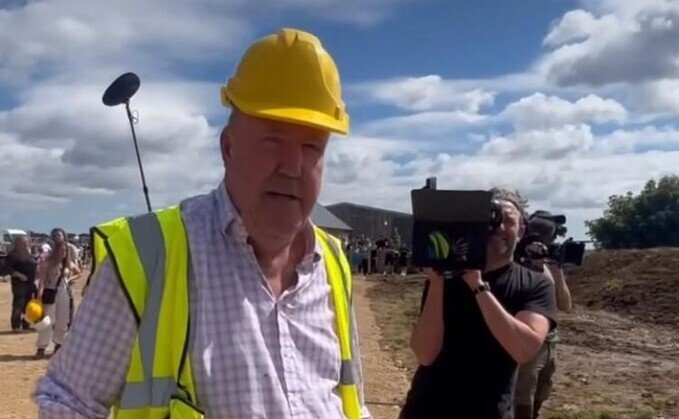
Jeremy Clarkson’s Diddly Squat farm in Oxfordshire is expanding its already extensive diversification portfolio with a new Prime Video standalone special, Jeremy Grows a Car: A Clarkson’s Farm Special, scheduled to air in spring 2027. The project involves rebuilding a Jaguar F-Type V6S using materials produced on the farm itself, including leather from Diddly Squat livestock, wool for carpeting, and flax fibre processed into a composite material intended as a sustainable alternative to carbon fibre for the car’s bodywork.
Automotive designer Ian Callum, who designed the original F-Type and the Aston Martin Vanquish, is collaborating on the redesign. Amazon has separately confirmed that Clarkson’s Farm Series Six is also scheduled for 2027.
Diddly Squat as a Diversification Case Study
Diddly Squat has become one of the most-watched real-world examples of layered farm diversification. From a standing start, the property now operates a farm shop, brewery, pub with bookings running months in advance, and a choir, in addition to generating television revenue across six confirmed series. The new special adds manufacturing to that list, built around the farm’s own raw material supply chain.
The flax component is worth noting separately. Flax fibre composites are under active commercial development as a lower-embodied-carbon substitute for carbon fibre in structural applications. If Clarkson’s project raises mainstream awareness of that end market, it could create broader interest in the crop among farmers looking at industrial fibre as a diversification option, though commercial-scale processing infrastructure remains limited in most regions.
What This Means for WA Operators
The transferable lesson from Diddly Squat is not the television deal. It is the architecture of diversification: each new enterprise at the farm draws on the same underlying asset, the land and what it produces, rather than importing unrelated revenue streams.
WA agritourism operators are already doing versions of this. Farm-produced food and beverages sold through on-site retail, wool and fibre used in accommodation or sold as product, and agricultural processes made visible to visitors are all examples of the same logic: the farm’s primary production becomes both the experience and the inventory.
The flax fibre angle is a less direct parallel for most WA operations. Industrial fibre cropping requires processing partnerships that do not yet exist at scale in WA, and the car manufacturing element is clearly a media project rather than a replicable business model. Operators should not read that part of the story as a template.
What is replicable is the principle of stacking. Diddly Squat’s pub booking wait time and the brewery’s output are both downstream of the same farming story that drives the television audience. Each element reinforces the others. WA operators building a second or third revenue stream on their property should test whether the new enterprise deepens the existing farm narrative or simply adds complexity. The ones that deepen it tend to market themselves.
WAAA’s member forum and mentorship program are designed to give WA operators a practical space to work through exactly this kind of diversification planning. If you are weighing a new on-farm enterprise and want to pressure-test it against what members in comparable operations have tried, joining the association is the direct path to that peer knowledge.