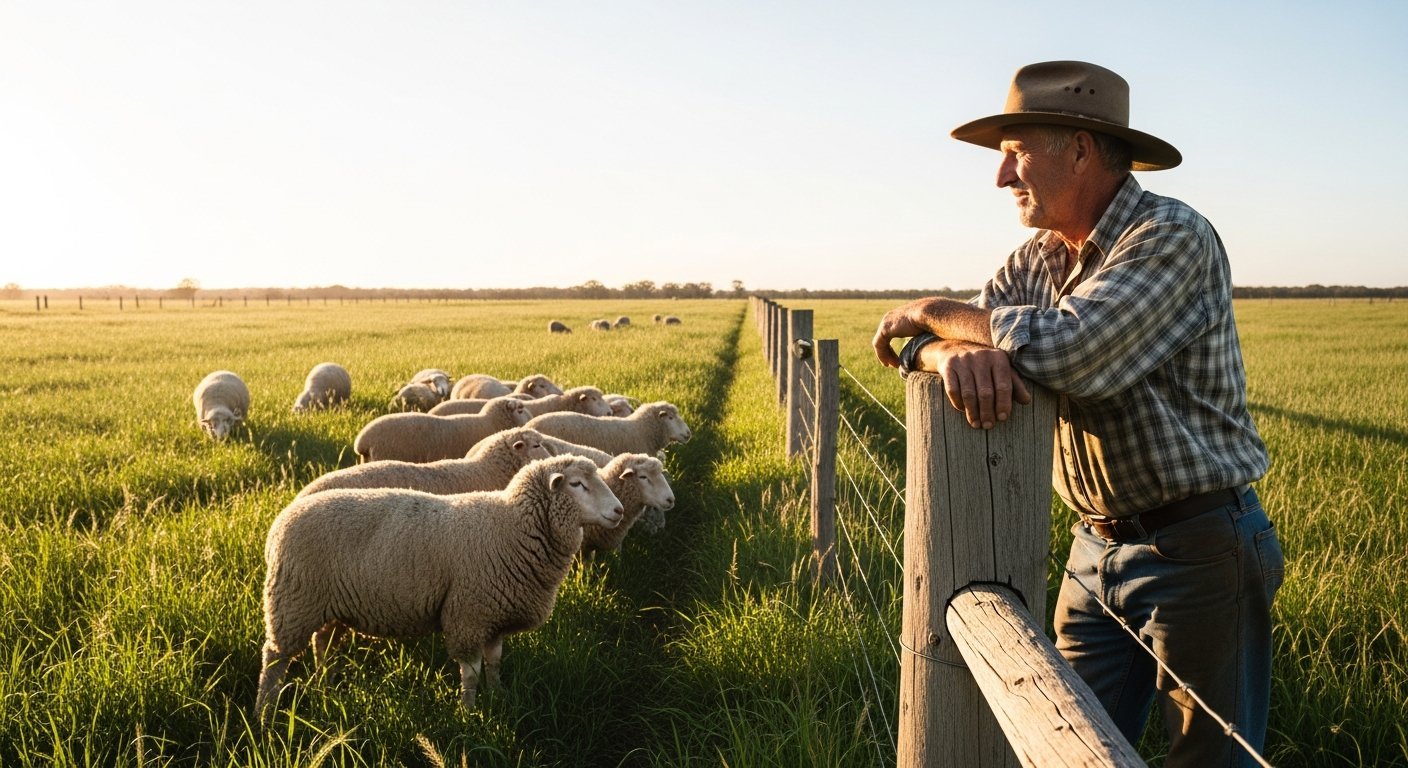
A five-year study by the Department of Primary Industries and Regional Development (DPIRD) has identified an optimal combination of forage species that provides a year-round feed supply for livestock. The findings from the FEED365 project enable operators to eliminate supplementary feeding, increase carrying capacity, and improve business resilience against seasonal variability.
Financial & Operational Impact
The research demonstrates a direct path to improved profitability by fundamentally altering feed management. The system increased livestock carrying capacity from a typical nine dry sheep equivalent per hectare (DSE/ha) to a consistent 10 DSE/ha year-round.
This increase was achieved while completely eliminating the need for supplementary feed and conserved fodder, which represents a significant operational cost reduction for livestock-based agritourism businesses. By removing reliance on purchased grain and mitigating seasonal feed gaps, the system provides greater financial stability and operational certainty, particularly during periods of drought or high input costs. For agritourism operations, the resulting improvement in pasture condition also enhances the aesthetic value of the property.
Recommended Forage Composition
The validated system is based on a strategic sequence of grazing across different forages throughout the year. The cycle begins with grazing green cereal crops in June-July, moving to annual forages from August to October, followed by perennial pastures, and then an unharvested cereal crop over the summer months.
The specific combination of species identified through trials at the Katanning Research Station consists of:
- Awnless triticale dry standing crop (34.7%)
- Tall wheatgrass and subclover (30.4%)
- Lucerne and cocksfoot (24.8%)
- Forage brassica-triticale-cereal rye mixture (10.0%)
DPIRD notes that while the principle of integrating diverse annual and perennial pastures holds, specific species components may be adjusted to suit local soil type and climate conditions.
Regional Validation Sites
The research findings were supported by field trials at six grower group demonstration sites across the state, ensuring the system’s applicability in different environments. The host groups for these sites were:
- Merredin and Districts Farm Improvement Group
- Stirlings to Coast Farmers
- WA Regenerative Livestock Producers
- The West Midlands Group
- ASHEEP & BEEF
- The Wagin Woodanilling Landcare Zone
The WAAA News Team