A national study of 911 farmers across the United States has found that 75% of agritourism operators recorded an income increase after adding visitor activities to their farming business, with 5% generating between $1 million and $5 million in gross annual revenue from agritourism alone. The figures, drawn from a University of Vermont and United States Department of Agriculture-sponsored study published in August 2026, confirm what many WA operators already suspect: opening the farm gate to paying visitors can materially change a family farm’s financial position. But the same data carries a clear warning that the income gap between operators is wide.
The Income Distribution Is Skewed
The national study’s headline figure of 75% recording income growth is encouraging, but the breakdown tells a more complicated story. Of the 911 farmers surveyed, 45% made less than $25,000 in 2026 from agritourism activities, while 24% earned between $25,000 and $99,999. Only a small share reached the top bracket. That spread suggests the difference between a viable agritourism arm and a costly side project lies in execution, not participation.
University of Vermont professor Lisa Chase, co-author of the study, notes that agritourism demands skills that have no overlap with conventional farming: marketing, hospitality, event management, and visitor education. Operators who treat it as an extension of their existing farm work, rather than a separate business discipline, tend to cluster at the lower end of the income range.
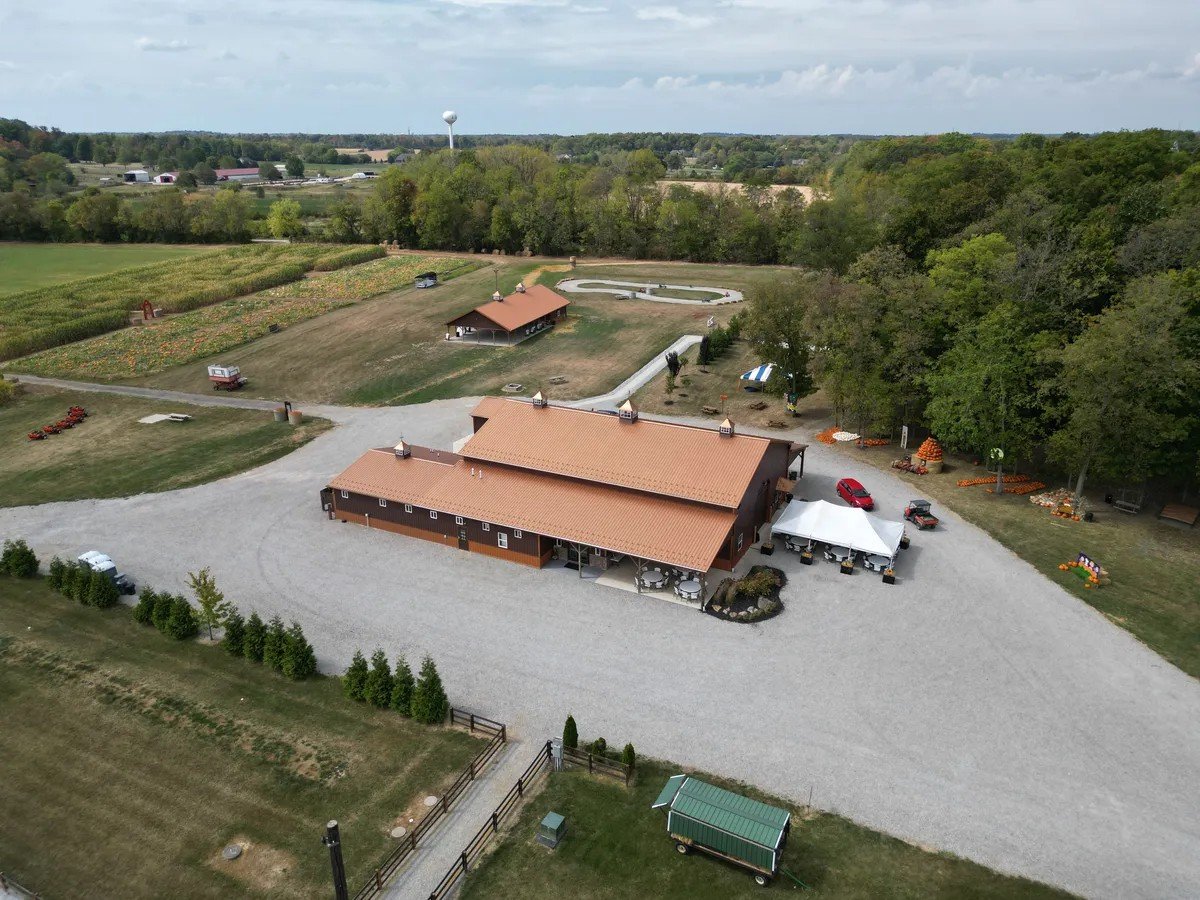
The Ohio experience illustrates what scale looks like at the upper end. Lucas Brothers Fall Festival, run by Susan Lucas and her family on a 1,500-acre grain and produce operation in south-west Ohio, draws visitors through a corn maze, hayrides, go-kart track, and barn store. Lucas is direct about the financial logic: grain prices are stagnant, input costs are rising, and the festival income is what keeps two farming families solvent. The state of Ohio recorded a 27% increase in farms operating an agritourism business in the five years to 2022, and several festival operators there are now issuing online ticketing to manage crowd volumes.
Nebraska operator Pam Nelson, who runs Nelson Produce Farm outside Omaha, built her business without inherited land or capital. She and her husband started with vegetable growing and two roadside stalls before opening to the public in 2019. The farm now expects close to 100,000 visitors in 2026 across tulip festivals, after-dark corn mazes, and monthly farm-to-table dinners running from June to October. Tickets for those dinners, sold from March, sold out in under an hour. The farm employs between 70 and 100 staff at peak season.
Agritourism Is Attracting Investor Attention
A structural risk is emerging in the United States that WA operators should register. Hidden Valley Orchards, one of the most popular fall festival destinations in south-west Ohio, has been operated for the past two years by Endurance Farm Partners, a limited liability entity linked to California-based real estate investors with connections to a San Francisco investment firm. The farm was previously locally owned. Investment firms appear to be identifying high-performing agritourism operations as acquisition targets, treating visitor revenue as a scalable asset rather than a family farm income stream.
This dynamic has not yet surfaced visibly in Western Australia, but it reflects a broader pattern in which profitable rural lifestyle and experience businesses attract outside capital once their revenue model is proven. For WA operators, the more immediate competitive pressure is likely to come from local government. In Ohio, Susan Lucas has noted a marked increase in free community fall events run by townships and municipalities that compete directly for the same visitor spending. Councils running zero-cost seasonal events is a pressure point WA operators near regional centres may recognise.
What This Means for WA Operators
The US data provides useful benchmarks for WA operators assessing where their agritourism business sits and where it could go.
A gross revenue figure under $25,000 (AUD equivalent considerations aside) is a signal to examine either the visitor experience offering or the pricing structure before expanding infrastructure. Many operators in the lower income bracket are running activities without adequate ticketing, retail, or food and beverage to convert visitor attendance into yield. Nelson Produce Farm’s model, where experience-based events such as farm dinners are pre-sold months in advance and sell out in under an hour, is a direct counter to the common WA pattern of walk-in, low-commitment visits.
For WA operators building out their agritourism offering, the practical implications from the US data include:
- Treat agritourism as a separate business unit with its own staffing, marketing and financial tracking, not as a farm activity with an admission fee attached.
- Pre-sell experience-based events well in advance of the season. WA’s South West and Great Southern regions have predictable visitor peaks tied to wildflower season (August to October), wine vintage (February to April), and school holidays. Advance ticketing creates cashflow certainty before the season opens.
- Build retail and food components alongside experience activities. The barn store and food service at Lucas Brothers contribute meaningfully to per-visitor revenue beyond the gate ticket.
- Monitor local government event programming in your region. Free community events scheduled in the same season as your paid activities are a direct competitor for discretionary day-trip spending.
The University of Vermont researchers also flag a data problem relevant here: inconsistent classification of agritourism revenue (excluding inedible farm products such as wool, decorative gourds and pumpkins from agricultural income figures) makes it difficult to track sector performance accurately. WAAA is working to build a comparable data picture for Western Australia, and accurate member reporting is what makes that possible. If you are a WA operator who has not yet joined or engaged with your income data through WAAA’s member network, that is the most direct way to ensure WA-specific figures, not US proxies, form the basis of future industry advocacy and funding cases.