A farm tourism property in Nueva Vizcaya, Philippines, is drawing overnight visitors by combining farm-to-table dining, sustainable art workshops, communal cooking sessions, and budget accommodation into a single integrated experience, offering a replicable model for WA agritourism operators looking to increase yield per visitor.
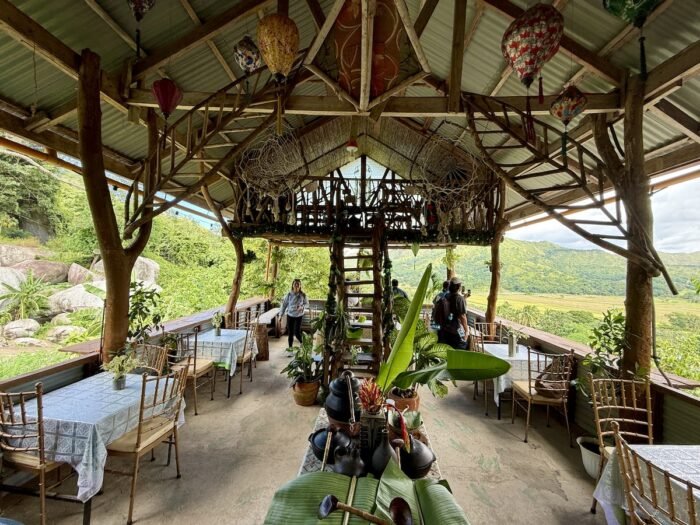
Rockwoods Agritourism Park and Peace Sanctuary, located in Aritao, Nueva Vizcaya, is operated by Ms. Marie de Pona. The property sits on a rock formation and incorporates rice field views, mountain scenery, and local Ilocano culinary traditions into its guest program. Accommodation is offered in themed cabanas, with the Mushroom Cabana priced at PHP 1,200 per night (approximately AUD 32) for up to three guests, including bedding and swimming pool access.
The Experience Stack
Rather than offering accommodation as a standalone product, Rockwoods structures the guest journey across multiple revenue-generating touchpoints within a single overnight visit. On arrival, guests dine at the farm-to-table restaurant, which serves dishes built around local produce: native pork nilaga, crispy tilapia, pinakbet, and brown rice. The restaurant functions as an attraction in its own right, with mountain and rice field views positioned as part of the product.
After lunch, guests participate in a facilitated sustainable art activity led by the owner, who also practises mental health advocacy and consultation. The activity is framed around environmental awareness and personal reflection rather than competitive output. This positions the workshop as a wellness product, not a craft session, which broadens its appeal to retreat groups and corporate bookings.
The evening centres on a communal bonfire dinner where guests help prepare traditional Ilocano dishes, including Insarabasab, a grilled pork dish seasoned with calamansi and onions, and grilled vegetables served with fish bagoong. The participatory format converts a meal into a cultural experience, increasing perceived value without a proportional increase in food cost.
The Operator Behind the Model
Ms. de Pona’s dual role as agritourism operator and mental health practitioner is central to the property’s positioning. She integrates her professional background directly into the guest program, allowing Rockwoods to market itself in wellness, sustainability, and cultural tourism channels simultaneously. This reduces reliance on a single visitor segment and gives the property credibility in categories that command higher pricing than conventional farm stays.
What This Means for WA Operators
The transferable lesson here is not about the specific dishes or the Philippine context. It is about experience stacking: the deliberate sequencing of activities across a single visit so that each touchpoint generates its own revenue or justifies a higher accommodation rate.
Many WA agritourism operators already hold the raw ingredients for this model. A working farm, a view, a regional food culture, and practical knowledge of land management are all present. What Rockwoods demonstrates is the value of packaging these elements into a structured itinerary rather than leaving guests to self-direct. A farm-to-table lunch, an afternoon activity tied to the operator’s own expertise (wool handling, beekeeping, bush food identification, regenerative agriculture), and a communal evening meal is a sequence WA properties could deploy with relatively low capital investment.
The wellness framing is worth noting separately. Ms. de Pona’s mental health background lets her market the same physical property into a retreat segment that pays considerably more than general farm stay visitors. WA operators who hold relevant professional qualifications, in counselling, nutrition, horticulture therapy, or similar fields, could apply the same logic. Where no such qualification exists, partnering with a credentialled practitioner to co-facilitate a retreat program achieves a comparable result.
The budget accommodation price point (AUD 32 per night at current exchange rates) is not directly relevant to WA, where cost structures, compliance requirements, and guest expectations differ substantially. However, the principle of offering a genuinely entry-level overnight option alongside premium experiences broadens the addressable market and fills beds on nights that might otherwise go empty.
WAAA is building the peer network and resource library that would let WA operators share and pressure-test models like this one before committing capital to them. If you are developing or refining your experience program and want to hear from operators who have worked through a similar transition, the WAAA member forum and mentorship program are the starting point. WAAA is volunteer-led and still growing, and the speed at which these resources develop is directly linked to the size of the membership behind them.