A second-generation dairy farm in East Dubuque, Illinois, has built a functioning agritourism stream on top of a 500-cow commercial dairy operation, offering a replicable model for farm operators seeking income diversification without abandoning their primary production business.
Berning Acres, owned and operated by Matt and Natalie Berning, runs 365 days a year across 800 acres. The farm supplies milk for cheese production through the Rolling Hills Dairy Producers Cooperative in Wisconsin. Agritourism is a secondary revenue line, not the core business, but Natalie Berning has identified it as having growth potential as the farm refines its offer.
The Agritourism Model
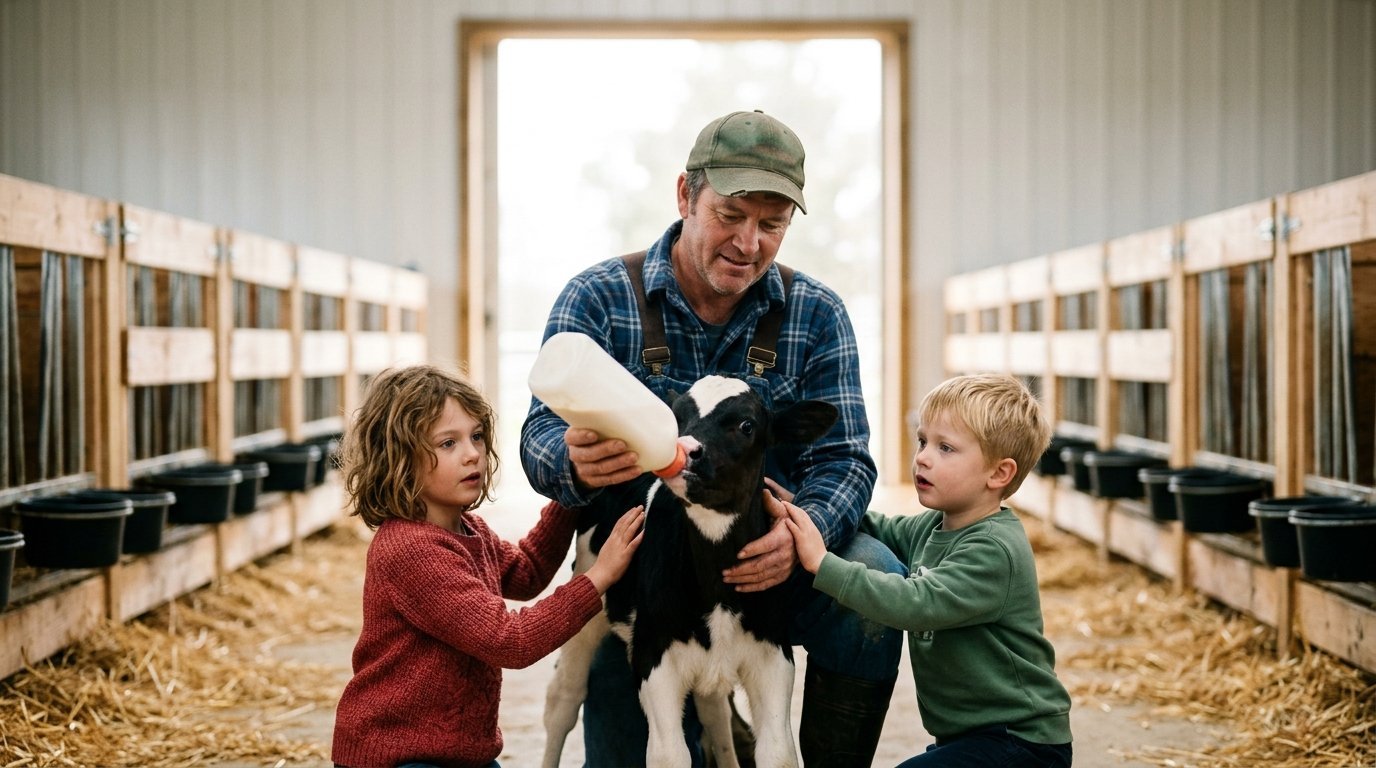
Tours run six days a week and follow a structured route: feed storage, calf housing, and the milking area, concluding with ice cream made from the farm’s own milk. The format is repeatable, low in complexity, and directly tied to what the farm already does. There is no theatrical overlay. The pitch to visitors is authenticity and hands-on access to a working operation.
Before offering public tours, Berning Acres ran a farm camp for children. The shift to open, structured tours reflects a deliberate move toward broader reach and more predictable scheduling.
Revenue from agritourism is supplemented by on-site retail: branded merchandise and a range of cheeses. The farm also invested in a billboard on US-20 West approaching Galena, a regional tourism destination that draws approximately 2 million visitors annually. That proximity to an established visitor flow is central to the farm’s marketing logic.
Financial Pressures on the Underlying Farm Business
The agritourism income sits against a backdrop of compressed margins in the dairy sector. Matt Berning noted that high corn prices are squeezing feed costs, as the farm relies on corn-based feed and the dairy commodity price does not move in tandem with grain prices in a way that offsets input costs. Electricity for cow cooling reached approximately USD 6,000 to 8,000 per month during summer 2026. Wet weather in northwest Illinois also disrupted the corn harvest.
The farm manages input costs through a combination of on-farm corn production and soil health practices including cover cropping and no-till, with some of those costs partially offset through grants.
Technology Integration
Berning Acres uses automated calf feeders, health-monitoring collars, and automated milking equipment. Matt Berning identified data integration as a persistent operational problem: equipment from different vendors does not communicate, creating fragmented data sets. He indicated that AI-assisted integration is the expected solution as the technology matures.
What This Means for WA Operators
The Berning Acres model contains three transferable lessons for WA agritourism operators.
First, the farm treats agritourism as a structured, repeatable product rather than an informal add-on. The tour has a fixed route, a fixed duration, and a consistent endpoint experience (ice cream). WA operators running informal or ad hoc tours should consider whether formalising the format would improve capacity, reduce the operator’s time cost per visitor group, and make the experience easier to market and price.
Second, the farm’s proximity to Galena’s 2 million annual visitors is the engine behind its marketing strategy. WA operators should audit which established visitor flows pass near or through their property. Regional towns hosting major events, wine regions drawing interstate visitors, or coastal routes with high seasonal traffic all represent equivalent opportunities. A billboard or roadside sign targeting that existing flow, as Berning Acres does on US-20, is a low-cost, high-visibility tactic that does not require a digital marketing budget.
Third, the farm sells branded merchandise and farm-produced food products alongside the tour experience. For WA operators already producing a primary product, on-site retail of that product (or derivatives of it) converts visitor interest directly into a second revenue event without requiring additional infrastructure. Regulatory requirements for food sales vary by product type and local government area, so operators should confirm their compliance position with their shire before adding a retail component.
The data integration problem Matt Berning describes, where farm management technology from different vendors does not communicate, is a recognised issue in WA’s precision agriculture sector as well. Operators investing in new farm technology for both production and visitor management should ask vendors directly about interoperability before committing to a system.
WAAA’s member network and Professional Support Network of vetted advisers are available to help WA operators work through the business structuring questions this model raises, including tour pricing, product retail compliance, and on-farm signage approvals. WAAA is small and volunteer-led, and building that resource base takes time, but the more operators who join and participate, the faster that work accelerates.