Darren Schmall, a fourth-generation farmer based in Madera, California, has expanded his almond and raisin operation across Madera and Fresno counties into a diversified agricultural business that now encompasses large-scale outdoor entertainment, agritourism, and commercial tree farming.
ApCal Rock’n Ranch: From Small Operation to Regional Venue
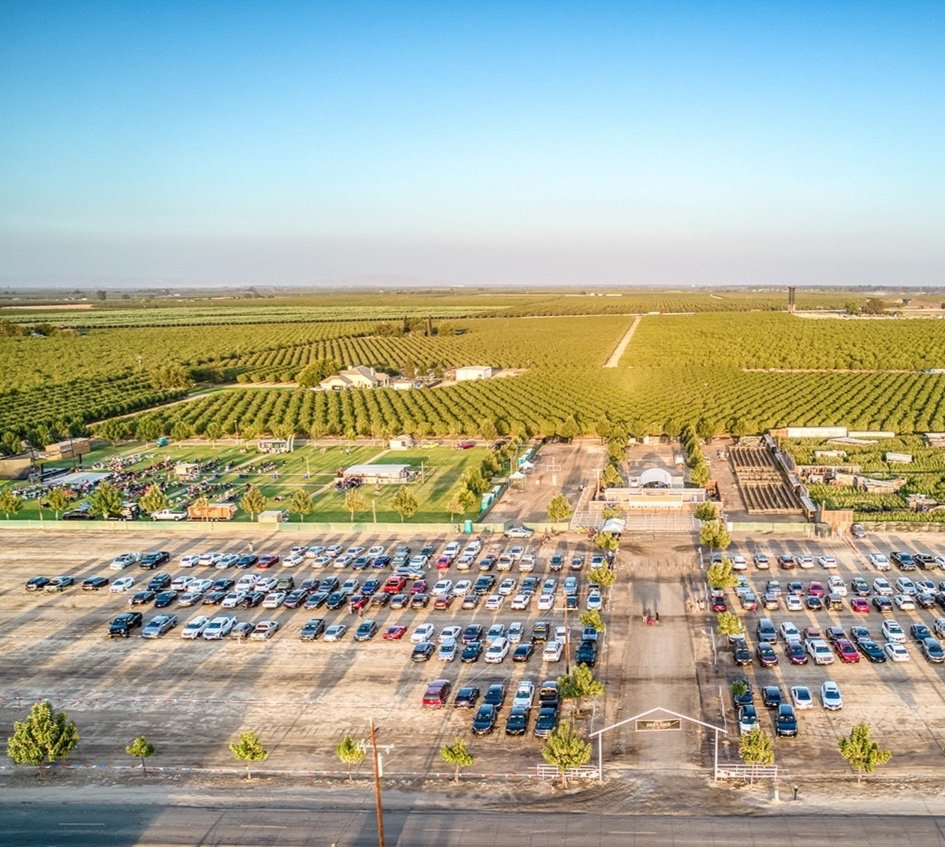
Schmall developed ApCal Rock’n Ranch, an outdoor entertainment venue set within working orchards and vineyards, with the explicit goal of connecting the public to agriculture. The venue has grown into one of the Central Valley’s largest outdoor entertainment destinations, drawing thousands of visitors annually through concerts, community events, and agricultural education programming.
For agritourism operators, the model is instructive. Rather than positioning the farm as a backdrop, Schmall has made the agricultural setting a core part of the visitor proposition, generating foot traffic and revenue streams that operate independently of commodity prices.
Megaflora Tree Farms: Innovation as a Second Revenue Line
Schmall also operates Megaflora Tree Farms, a commercial venture producing a fast-growing hybrid tree variety. Key specifications of the product include:
- Growth rate of 10 to 15 feet per year
- High drought tolerance with low water consumption
- Capacity for significant carbon sequestration
The trees are being marketed to municipalities, schools, and private landowners seeking shade solutions and environmental outcomes. The operation represents a direct commercial application of sustainability — turning on-farm innovation into a standalone revenue line with a customer base outside traditional agricultural markets.
Cost Pressures Remain the Dominant Operational Challenge
Despite the diversification, Schmall is direct about the structural cost pressures facing California growers. Diesel prices function as a base multiplier across production costs, impacting fuel, freight, and inputs simultaneously. He estimates that regulatory compliance alone accounts for approximately 10 percent of total farm operating costs — a figure that compounds the effect of California’s higher labour costs relative to competing agricultural states.
These cost pressures have not disappeared for diversified operations. Entertainment and agritourism activities carry their own labour, compliance, and infrastructure costs, and operators entering this space should model those expenses carefully rather than treat agritourism as a low-cost revenue supplement.
Water access remains an ongoing variable. Schmall acknowledges his operation has had relatively stable access, but notes that growers across other parts of California continue to face constrained allocations and uncertain supply outlooks.
Strategic Takeaway for Agritourism Operators
Schmall’s operation illustrates a deliberate approach to diversification: maintaining core commodity production while layering in revenue streams, events, education, and commercial innovation that reduce dependence on any single market. The model requires investment in infrastructure and public-facing operations, but it also builds direct consumer relationships and brand recognition that commodity sales alone cannot generate.
For agritourism operators evaluating a similar path, the ApCal Rock’n Ranch example demonstrates that scale and community engagement, not just crop variety or farm aesthetics, are what convert a farming property into a sustainable visitor destination.
The WAAA News Team