A century-old aristocratic estate in Sikkim, India, opened as a commercial farm stay in June 2026, demonstrating how deep family history and working farm infrastructure can be packaged into a premium hospitality product without stripping either element of its authenticity.
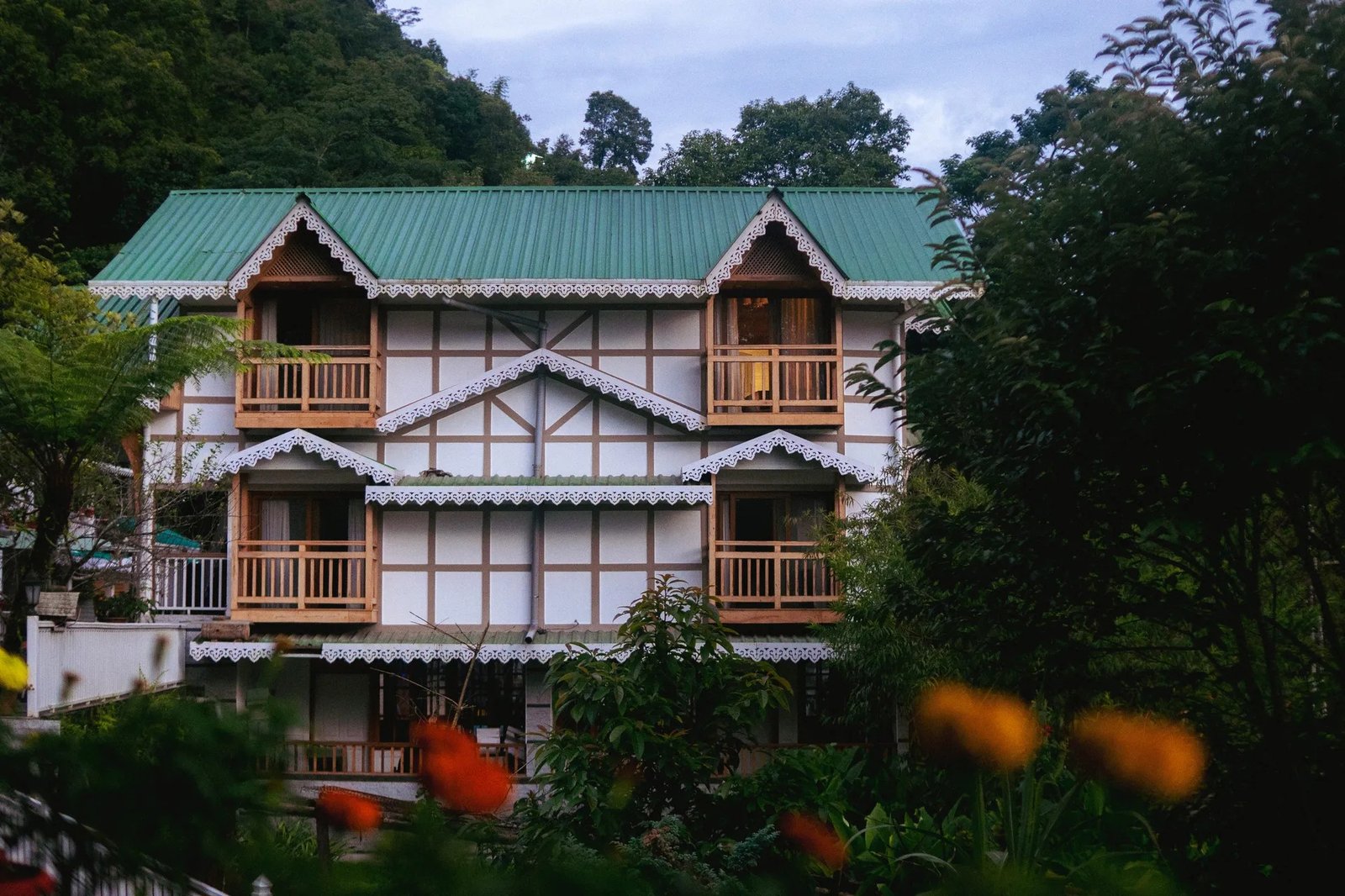
Yangtey Farmhouse, located in the village of Yangtey in West Sikkim, was developed by Zamyang and Duenka Bhutia on land held by their family for generations. The property anchors its commercial offer around the estate’s documented history, traceable to Ringzing Namgyal, a 19th-century Himalayan surveyor and guide who led British explorer Sir Douglas Freshfield’s 1899 Kangchenjunga expedition. That provenance is not background decoration. It is built into the property’s name, its restaurant branding, its guided walks, and its storytelling across guest interactions.
The Business Model
The property operates six rooms across three blocks, ranging from deluxe rooms with valley views to cottage-style villa units with private kitchenettes and in-room laundry. Rates begin at approximately Rs 18,000 per night for a double room. A 22-seat restaurant trades under the name Malling, a reference to the family’s ancestral place, and is open to walk-in visitors as well as guests, creating a secondary revenue stream independent of overnight bookings.
The property employs a team of 20 alongside three generations of the Bhutia family who remain in residence. That combination is deliberate. The professional team carries service standards; the family’s visible presence carries authenticity. The two functions are kept distinct rather than merged into an informal experience that can be difficult to scale or maintain under pressure.
Farm Infrastructure as Guest Experience
Yangtey Farmhouse retains working farm operations integrated directly into the guest program. Livestock, including cattle and poultry, occupy stepped terracing on the property. Guests can observe milking, participate in it, and request that fresh milk or free-range eggs be placed in their rooms. This is not a simulated encounter. The animals are productive, and the kitchen draws produce from the family’s land and neighbouring small-scale farmers.
The restaurant menu builds on that supply chain. Dishes using seasonal produce, farm-raised chicken, and locally sourced pork are positioned as the property’s culinary signature. Many items require advance notice due to seasonal availability or preparation time, a constraint the property addresses through direct communication with arriving guests rather than by standardising the menu downward.
Experience Design and Offsite Programming
In addition to on-farm activities, the property structures guided experiences into the surrounding landscape. These include a hike to a 17th-century monastery where prayer flags are made on site, a heritage walk to a 300-year-old colonial-era house with a catered lunch served on its lawns, and a short early-morning walk to a viewpoint for mountain range views. Each experience is linked to the property’s historical narrative rather than offered as a generic rural activity.
The property also uses locally sourced amenity products. Bathroom toiletries come from a Sikkim-based organic brand that incorporates regional botanicals. The connection between product provenance and place is communicated to guests as part of the room description, not as an afterthought.
What This Means for WA Operators
The Yangtey model is relevant to WA operators who hold properties with documented history but have not yet made that history a central commercial asset.
Several practical elements are transferable. The practice of naming dining venues and guest experiences after family or place history, rather than generic rural descriptors, is low-cost to implement and reinforces differentiation. The split between a professional service team and visible family presence addresses a common tension in farm stay operations: guests want authenticity, but operators cannot be expected to perform hospitality 24 hours a day without support. Separating those two roles structurally is worth examining.
The approach to farm produce is also worth noting. Yangtey does not offer farm access as a novelty. The farm is productive, and guest interaction with it is framed around genuine agricultural activity. Operators who are already producing, whether eggs, dairy, fruit, or meat, can review whether that production is currently being surfaced as part of the guest offer or left invisible in the background.
The weakest parallel is scale. A team of 20 staff supporting six rooms represents a staffing ratio that is not realistic for most WA agritourism operations, many of which are owner-operated or carry only small part-time workforces. The headline model is instructive; the staffing structure is not directly replicable for most WA properties.
WAAA’s member forum and mentorship program are useful points of contact for operators working through how to package family or property history into a coherent commercial narrative. These are conversations that benefit from peer input, and members who have already gone through that process are part of the network.